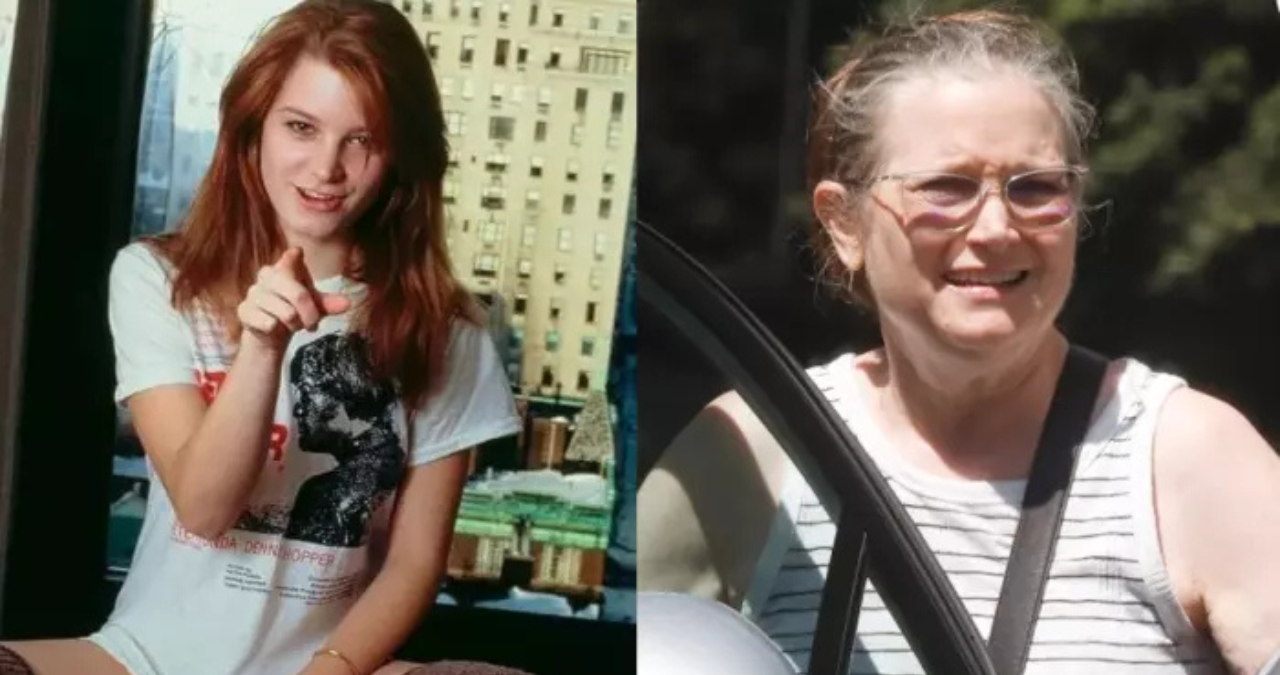

Bridget Fonda is an American actress whose name remains closely associated with some of the most memorable films of the late 1980s and 1990s. Born into one of Hollywood’s most recognizable acting families, she built a career that was notably different from simply relying on her famous surname. Through performances in The Godfather Part III, Single White Female, Singles, Point of No Return, It Could Happen to You, Jackie Brown, A Simple Plan, and Lake Placid, she demonstrated a versatile screen presence that allowed her to move comfortably between thrillers, dramas, romantic comedies, action films, and darkly humorous projects.
Interest in Bridget Fonda has remained strong even though she stepped away from acting more than two decades ago. Unlike many performers who continue appearing in interviews, television programs, and new movies, Fonda largely chose a private life away from Hollywood. That decision has made her career even more intriguing because audiences are often curious about what happened to an actress who was once such a familiar presence on the big screen.
Today, Bridget Fonda is remembered not simply as a member of the Fonda acting dynasty but as an accomplished performer who established her own identity. Her career was relatively brief compared with many Hollywood stars, yet the range of her roles and the popularity of several of her films have helped preserve her place in cinema history.
Who Is Bridget Fonda?
Bridget Jane Fonda was born on January 27, 1964, in Los Angeles, California. She comes from an extraordinary entertainment family. Her father was actor Peter Fonda, her grandfather was legendary actor Henry Fonda, and her aunt is actress and activist Jane Fonda. Her extended family connections placed her close to Hollywood from childhood, although her professional career ultimately developed through her own work and training.
Bridget Fonda’s first screen appearance came when she was a young child in Easy Rider, the influential 1969 film starring her father Peter Fonda and Dennis Hopper. Her appearance was uncredited, and she did not immediately begin pursuing a professional acting career.
Instead, her interest in performance developed later. She became involved in theater during her school years and eventually studied acting at New York University. She also trained at the Lee Strasberg Theatre Institute, giving her a formal foundation in acting before she began establishing herself professionally.
That education was important because Bridget Fonda entered an industry where comparisons with her famous relatives were inevitable. Rather than depending solely on her family name, she developed a reputation through a steady series of distinctive performances.
Bridget Fonda and the Beginning of Her Acting Career
The professional stage of Bridget Fonda’s career began during the late 1980s. She appeared in films such as Aria, You Can’t Hurry Love, and Shag, gradually building experience and becoming more recognizable to audiences.
One of her significant early opportunities came with Scandal in 1989, where she portrayed Mandy Rice-Davies. The performance earned her a Golden Globe nomination for Best Supporting Actress, an important early indication that critics and industry observers saw considerable potential in her work.
Fonda’s early performances were notable because she did not restrict herself to one particular type of character. She could play vulnerable dramatic roles, energetic young women, romantic characters, and more complicated personalities. That flexibility would become one of the defining features of her career.
Her breakthrough arrived with The Godfather Part III in 1990. Appearing in a major installment of one of cinema’s most famous franchises gave Bridget Fonda considerably more visibility. The film placed her alongside major performers and helped move her career into a much larger Hollywood spotlight.
Bridget Fonda in the 1990s
The 1990s became the defining decade of Bridget Fonda’s career. During this period, she appeared in a remarkable collection of films, many of which remain recognizable to audiences today.
After The Godfather Part III, she continued working steadily. Her credits included Doc Hollywood, Single White Female, and Singles. These films showed how easily she could transition between different genres.
Single White Female, released in 1992, became particularly important to her public image. Directed by Barbet Schroeder, the psychological thriller placed Fonda in the central role of Allison Jones, a woman whose new roommate becomes increasingly obsessed with her life. The film has remained a popular reference point when audiences discuss psychological thrillers of the early 1990s.
That same year, Fonda appeared in Cameron Crowe’s Singles, a romantic comedy-drama set against Seattle’s music scene. The film featured an ensemble cast and explored relationships, adulthood, friendship, and uncertainty. Fonda’s role as Janet Livermore demonstrated another side of her acting ability.
Point of No Return and Action Roles
In 1993, Bridget Fonda took on one of the most physically demanding and memorable roles of her career in Point of No Return. The movie was an American remake of the French film La Femme Nikita, and Fonda played Maggie Hayward, a troubled woman recruited and trained to become an assassin.
The role required Fonda to combine emotional vulnerability with physical intensity. Rather than presenting the character as a conventional action hero, the film focused heavily on Maggie’s transformation and the psychological consequences of her new life.
The performance helped establish Bridget Fonda as an actress who could carry a major genre film. It also demonstrated her willingness to move beyond the romantic and dramatic roles associated with many young actresses of that era.
She continued exploring different genres with projects including Bodies, Rest & Motion, Camilla, and It Could Happen to You. In It Could Happen to You, she starred opposite Nicolas Cage in a romantic comedy about a police officer who promises to share lottery winnings with a waitress.
The contrast between Point of No Return and It Could Happen to You illustrates an important part of Fonda’s appeal. She could move from action and suspense to warmth and romantic comedy without appearing limited to one screen persona.
Bridget Fonda in Jackie Brown
One of the most recognizable later performances by Bridget Fonda came in Quentin Tarantino’s Jackie Brown in 1997. The film starred Pam Grier, Samuel L. Jackson, Robert Forster, Robert De Niro, Michael Keaton, and Fonda.
Fonda played Melanie Ralston, a laid-back and somewhat unpredictable character whose personality adds another layer to the film’s crime story. Her performance became particularly memorable because it contrasted with the more serious roles that had helped establish her earlier career.
According to accounts of her career, Fonda was on the same flight as Tarantino when he offered her the role. The opportunity became one of the most recognizable collaborations of her filmography.
Jackie Brown also demonstrated that Fonda could fit naturally into an ensemble dominated by highly distinctive performers. Rather than trying to overpower the scene, she used Melanie’s relaxed attitude and unusual personality to create a character who stood out in her own way.
A Simple Plan and Critical Recognition
Another major highlight of Bridget Fonda’s career was A Simple Plan, Sam Raimi’s 1998 crime drama. The film starred Bill Paxton, Billy Bob Thornton, and Fonda and explored how the discovery of a large amount of money could destroy the lives of ordinary people.
Fonda played Sarah Mitchell, the wife of Paxton’s character. Sarah is not simply a background character; she becomes an important part of the moral and emotional conflict surrounding the stolen money.
The role earned Fonda recognition from critics and award organizations. She received a Blockbuster Entertainment Award nomination and a Boston Society of Film Critics nomination for Best Supporting Actress for her performance.
A Simple Plan remains an important film when evaluating Bridget Fonda’s acting career because it showed her ability to contribute to a serious, character-driven story. Her performance worked because Sarah’s concerns feel grounded and believable as the situation becomes increasingly dangerous.
Lake Placid and Popular Cinema
In 1999, Bridget Fonda appeared in Lake Placid, a creature-feature horror comedy directed by Steve Miner. The movie combined suspense, humor, and an enormous crocodile with a cast that included Bill Pullman and Oliver Platt.
Fonda played paleontologist Kelly Scott, bringing an intelligent and determined personality to a film that deliberately balanced horror with comedy.
Although Lake Placid was very different from A Simple Plan, the movie became another recognizable title in Fonda’s filmography. It also demonstrated her continued willingness to participate in commercial genre entertainment.
For viewers discovering Bridget Fonda today, Lake Placid can be an interesting reminder of how broad her career was. She was equally comfortable appearing in prestigious dramas and entertaining genre movies.
Bridget Fonda’s Later Movies
As the 1990s came to an end, Fonda continued working in both film and television. Her later credits included Kiss of the Dragon, the 2001 action film starring Jet Li, as well as The Whole Shebang.
She also appeared in television projects and earned recognition for television work. Her credits included In the Gloaming and No Ordinary Baby, with award nominations connected to her television performances.
Her final screen role was the title character in the television film Snow Queen in 2002. IMDb’s current filmography similarly lists Snow Queen among her final acting credits.
The end of her career was relatively quiet. There was no major farewell movie or lengthy retirement announcement. Instead, Bridget Fonda gradually moved away from professional acting and public Hollywood life.
Why Did Bridget Fonda Leave Hollywood?
The question of why Bridget Fonda stopped acting continues to generate interest. Available accounts indicate that her departure was connected to major changes in her personal life rather than a simple loss of professional opportunities.
In 2003, she married composer Danny Elfman. The couple later had a son, Oliver. Around this period, Fonda’s life increasingly shifted away from the entertainment industry. She had also experienced a serious car accident in early 2003, after which plans for a television role changed.
Fonda ultimately chose a quieter lifestyle. The Independent reported that when asked about returning to acting, she expressed the view that she enjoyed being a private person outside Hollywood.
That perspective helps explain why her absence has attracted so much curiosity. Hollywood is an industry built around visibility, yet Fonda chose the opposite path. She stepped away from auditions, premieres, publicity campaigns, and the constant expectations that accompany celebrity.
Bridget Fonda and Danny Elfman
Bridget Fonda married composer Danny Elfman in 2003. Elfman is widely known for his film and television music, including collaborations with director Tim Burton.
Their relationship brought together two people from different parts of the entertainment industry. Fonda was known primarily for acting, while Elfman had built a major career as a composer and musician.
The couple have a son, Oliver Elfman, who was born in 2005. Since Fonda has generally maintained a private lifestyle, relatively little of her family life has been placed in the public spotlight.
That privacy is consistent with the broader direction she chose after leaving acting. Instead of turning her retirement into a publicity opportunity, she largely remained outside Hollywood’s media cycle.
Where Is Bridget Fonda Today?
Interest in Bridget Fonda has periodically increased whenever she is photographed in public. In August 2026, recent reporting noted a rare public outing in Los Angeles, highlighting just how unusual such appearances have become after years away from the entertainment spotlight.
Her limited public presence has naturally encouraged renewed interest in her movies and career. However, it is important to distinguish confirmed information from online speculation. Fonda has not maintained the kind of highly visible social-media presence associated with many modern celebrities.
For that reason, claims about her private activities should be treated carefully unless they come from credible sources or direct statements. Her decision to maintain privacy is itself an important part of her story.
The Lasting Legacy of Bridget Fonda
The legacy of Bridget Fonda is stronger than the relatively short length of her acting career might suggest. She worked with respected directors, appeared alongside major Hollywood performers, and built a filmography covering several genres.
Her career also provides an interesting example of an actor who successfully escaped being defined entirely by a famous family. Although her surname opened doors and generated expectations, her performances ultimately gave audiences reasons to remember her independently.
Films such as Single White Female, Singles, Point of No Return, Jackie Brown, A Simple Plan, and Lake Placid continue to attract viewers. IMDb’s current records list dozens of acting and related credits for Fonda, reflecting a substantial body of work despite her early departure from the industry.
Her career is especially interesting because it represents a period of Hollywood filmmaking that emphasized distinctive mid-budget dramas, thrillers, romantic comedies, and genre films. Fonda moved through all of these categories while maintaining a recognizable screen presence.
Why Audiences Still Search for Bridget Fonda
Search interest in Bridget Fonda is driven by several factors. Younger viewers discover her movies through streaming services, film recommendations, and discussions of 1990s cinema. Longtime fans, meanwhile, remain curious about an actress who seemed destined for a much longer Hollywood career.
There is also a fascination with celebrities who deliberately step away from fame. In an era when actors can remain constantly visible through social media, interviews, podcasts, and entertainment news, Fonda’s private lifestyle feels increasingly unusual.
Her story therefore has two dimensions. One is the career itself, filled with memorable performances. The other is the decision to leave a successful profession while she was still recognizable and in demand.
Bridget Fonda’s Most Memorable Performances
When discussing the most important work of Bridget Fonda, Single White Female is an obvious starting point because of its enduring status as a psychological thriller. Her role as Allison Jones remains one of the performances most closely associated with her name.
Point of No Return is another essential title because it allowed Fonda to lead an action-oriented production and demonstrate a very different range.
Jackie Brown represents her ability to thrive in a Quentin Tarantino ensemble, while A Simple Plan highlights her dramatic abilities. Lake Placid, meanwhile, represents the lighter and more commercial side of her filmography.
Together, these projects show why Bridget Fonda remains relevant to conversations about 1990s cinema. She was never limited to a single genre, and her filmography still offers something for viewers with different tastes.
Final Thoughts on Bridget Fonda
Bridget Fonda’s career may have ended earlier than many audiences expected, but her contribution to American film remains memorable. From her early work in Scandal and The Godfather Part III to major 1990s projects such as Single White Female, Singles, Point of No Return, Jackie Brown, and A Simple Plan, she created a diverse body of performances.
What makes Bridget Fonda particularly fascinating is the combination of professional success and personal privacy. She experienced the intense visibility that comes with being a Hollywood actor, yet ultimately chose a quieter life away from the cameras.
For audiences discovering her work today, revisiting her films offers a chance to understand why she became such a recognizable performer in the first place. Her decision to leave Hollywood does not erase her accomplishments; instead, it adds another fascinating chapter to the story of an actress who built a career on her own terms.
Conclusion
Bridget Fonda remains a memorable figure in American cinema, particularly for audiences who remember the distinctive films of the late 1980s and 1990s. Her performances in Single White Female, Point of No Return, Singles, Jackie Brown, A Simple Plan, and Lake Placid demonstrated her ability to move between suspense, action, drama, comedy, and crime stories with confidence.
Although Bridget Fonda eventually stepped away from acting and chose a much more private lifestyle, her decision did not diminish the impact of her earlier work. Instead, her relatively quiet departure from Hollywood has made her story even more intriguing. Unlike celebrities who remain constantly visible, she chose to focus on life away from the entertainment industry’s spotlight.
Today, Bridget Fonda is remembered as more than simply a member of the famous Fonda acting family. She established a successful career through her own performances and became one of the recognizable actresses of her generation. For longtime fans and new viewers discovering her films, her body of work continues to offer a fascinating look at an actress who achieved success in Hollywood before ultimately choosing a different path.
You May Also Read
Sean Astin Net Worth: A Complete Look at His Career, Income, and Financial Success