
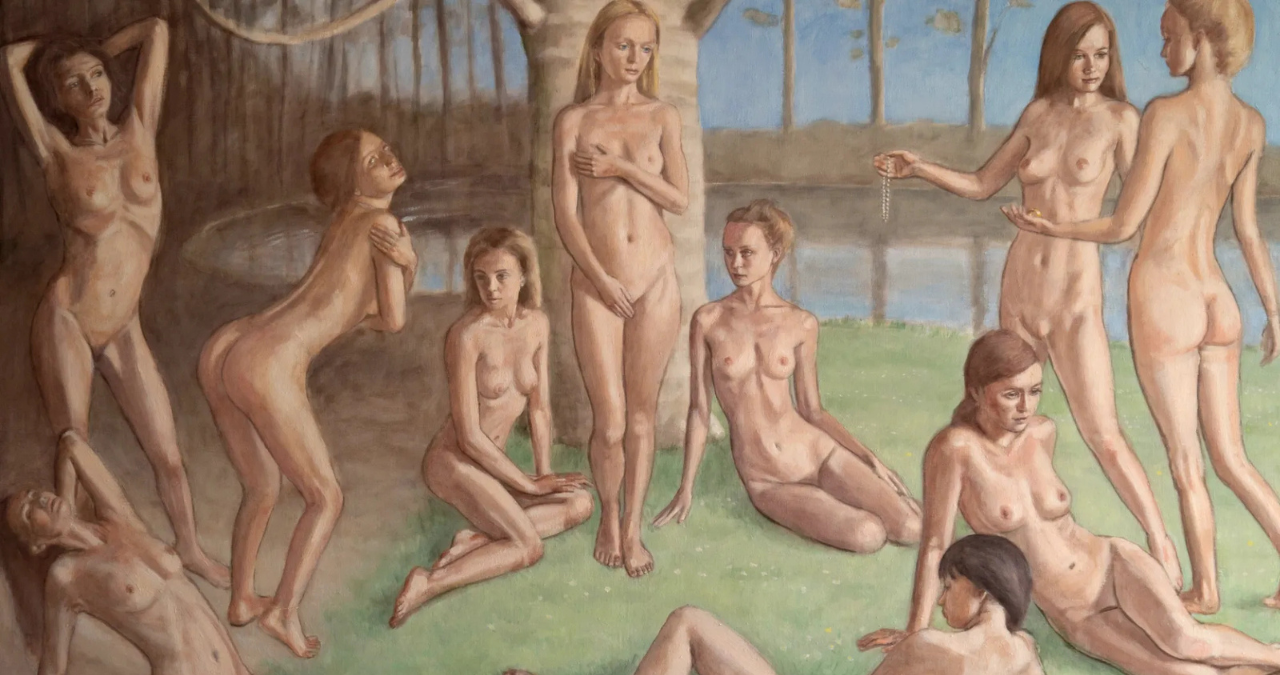

Nude art has been part of human creativity for thousands of years. Long before photography, film, or modern design, artists used the human body to explore beauty, vulnerability, identity, spirituality, and power. Today, continues to attract attention because it sits at the meeting point of aesthetics, culture, and emotion.
For many people, is often misunderstood. It is sometimes reduced to something purely provocative, but historically it has served a much wider purpose. Painters, sculptors, illustrators, and photographers have used to study anatomy, movement, proportion, and the human condition itself. In galleries, museums, and art schools around the world, remains one of the most respected traditions in visual culture.
If you search for nude art today, you are likely looking for more than images. Most readers want context. They want to know why the nude body has appeared in so many artistic periods, how different cultures approached it, and why nude art still influences modern visual storytelling. That is exactly where this article begins.
From ancient civilizations to contemporary exhibitions, has evolved with society. Each era has given it new meaning. Sometimes it symbolized perfection. Sometimes it represented freedom. At other times it challenged social rules. The lasting importance of nude art comes from its ability to reflect changing ideas about humanity itself.
The Origins of Nude Art in Ancient Civilizations
The earliest examples of nude art appeared thousands of years ago. Ancient cultures did not always separate the naked body from religion, ritual, or philosophy. In many societies, the human form represented fertility, strength, divine beauty, or the balance of life.
Ancient Greece is often considered one of the most influential sources of. Greek sculptors carefully studied muscles, posture, and movement. Their goal was not only realism but idealized human perfection. The nude body became a symbol of harmony and intellectual order. Statues of gods, athletes, and heroes showed how deeply the Greeks linked physical beauty with moral virtue.
Ancient Rome adopted many of these ideas. Roman artists often copied Greek became part of civic identity and political storytelling.
In other parts of the world, nude art developed differently. Ancient Indian temple sculpture, for example, often celebrated the body as part of spiritual and cosmic energy. In some African traditions, the human form was stylized to communicate ancestry, ritual power, and community values.
What makes early so important is that it established a visual language. Even today, contemporary artists often return to these ancient principles of proportion, form, and symbolic meaning.
Nude Art During the Renaissance
When people think about classical, the Renaissance usually comes to mind first. This period transformed European painting and sculpture, and the human body became central to artistic education.
Renaissance artists studied anatomy with remarkable seriousness. They observed real bodies, examined muscle structure, and developed new techniques for representing light, volume, and movement. Nude art was no longer only symbolic. It became a scientific and philosophical pursuit.
Why the Renaissance Changed Nude Art Forever
The Renaissance revived classical ideals but added emotional depth. Artists were no longer interested only in ideal perfection. They wanted human presence. They wanted bodies that breathed, suffered, loved, and moved naturally.
Artists such as Michelangelo, Leonardo da Vinci, and Titian elevated into a major intellectual achievement. The nude body became a place where technical skill and emotional storytelling met. This was one of the most important turning points in the history of nude art.
Religious art also played a major role. Biblical figures were often portrayed with physical realism. That decision reflected the Renaissance belief that human beings were worthy subjects of artistic exploration.
For readers interested in art history, an internal link on your site could naturally fit here, such as: “Read more in our guide to Renaissance painting techniques.”
The Difference Between Nude Art and Eroticism
One of the biggest reasons is misunderstood is because people often confuse it with erotic imagery. The difference matters.
Nude art is primarily concerned with artistic expression, symbolism, form, and meaning. The body becomes a subject of visual inquiry. Artists may focus on gesture, balance, anatomy, vulnerability, or social commentary.
Erotic imagery, by contrast, is generally created with sexual stimulation as a central purpose. That difference in intention shapes everything from composition to context.
This distinction helps explain why appears in respected museums, university classrooms, and major academic studies. It is not simply about nakedness. It is about interpretation.
The best nude art often creates reflection rather than instant reaction. It asks viewers to think about mortality, identity, gender, power, and beauty. That intellectual layer is what separates from mere exposure.
How Artists Use Nude Art to Explore Human Identity
Modern artists rarely approach nude art only as an exercise in anatomy. Today, the nude body often becomes a way to discuss identity, politics, and emotional truth.
A body can communicate far more than appearance. It can suggest age, fragility, resistance, confidence, memory, or alienation. Because of this,has become a powerful language in contemporary culture.
Gender and Representation
For centuries, many traditions were shaped largely by male artists and male patrons. That influenced how bodies were represented and who was seen as worthy of being depicted.
Contemporary artists have challenged that tradition. Women artists, queer artists, and artists from underrepresented communities have expanded into something more inclusive. Their work often questions who is looking, who is being seen, and what power exists within that relationship.
As a result, nude art today often becomes a conversation about visibility and agency rather than only beauty.
Emotional Honesty in Contemporary Nude Art
Many modern creators use to remove social masks. Clothing can signal class, profession, or status. Without it, viewers often confront a more immediate sense of humanity.
That is why contemporary nude art can feel intimate without being erotic. It often reveals emotional vulnerability. A simple posture or gaze can carry an extraordinary psychological weight.
For readers exploring contemporary culture, an internal link here could point to another article like: “How modern photography changed visual storytelling.”
Famous Works That Shaped Nude Art
Throughout history, certain masterpieces have defined the public understanding of nude art.
Michelangelo’s David remains one of the most celebrated sculptures ever created. It demonstrates how can communicate strength, tension, and psychological focus.
Sandro Botticelli’s The Birth of Venus offered a softer vision of. The figure appears graceful, poetic, and symbolic rather than anatomical in a strictly scientific way.
Édouard Manet’s Olympia changed the conversation around in the nineteenth century. It challenged expectations and forced viewers to confront social class, gender, and modernity.
In the twentieth century, artists like Egon Schiele, Amedeo Modigliani, and Lucian Freud pushed in even more personal directions. Their bodies were not idealized. They felt raw, imperfect, and deeply human.
These works matter because each one changed how audiences understood the body. Nude art kept evolving because artists kept asking new questions.
A valuable external resource for further reading is The Metropolitan Museum of Art: https://www.metmuseum.org
Another strong reference is The National Gallery: https://www.nationalgallery.org.uk
Nude Art in Photography
Photography introduced an entirely new chapter in. Unlike painting or sculpture, photography captures real bodies with immediate specificity. That realism changed both artistic possibilities and public debate.
Early photographic often borrowed from classical painting. Poses, lighting, and framing were designed to connect photography with established artistic traditions.
Over time, photographers began to explore more candid and psychological forms of nude art. Instead of ideal bodies, they often showed lived bodies. Wrinkles, scars, age, and asymmetry became part of the artistic language.
Why Photography Made Nude Art More Immediate
Photography can create a powerful sense of presence. The viewer feels closer to an actual person rather than an imagined ideal.
That closeness can make more emotionally direct. It can also make questions of consent, gaze, and interpretation more important.
In contemporary galleries, photographic often examines themes such as self-image, body politics, and vulnerability in digital culture.
The Role of Nude Art in Art Education
One reason remains central in art schools is simple: the human body is one of the most complex subjects an artist can study.
Learning to draw the figure teaches observation, proportion, balance, and spatial awareness. It forces artists to understand how light moves across surfaces and how structure supports expression.
For centuries, life drawing has been part of formal artistic training. That tradition continues because develops discipline. It teaches artists not just what a body looks like, but how it occupies space.
Students also learn something deeper. They learn that nude art is not about copying appearance. It is about seeing relationships between shape, rhythm, tension, and gesture.
This educational role helps explain why continues to hold authority in professional artistic practice.
Cultural Debates Around Nude Art
Nude art has never existed outside culture. What one society celebrates, another may criticize. Ideas about modesty, morality, gender, and public display shape how nude art is received.
In some periods, represented high culture. In others, it faced censorship. These debates continue today, especially online where context is often removed.
What matters is not simply whether a body is shown. Context matters. Intention matters. Artistic framework matters.
Museums, academic institutions, and respected galleries help preserve that context. They remind viewers that nude art belongs to a long intellectual and cultural tradition.
This is one reason thoughtful discussion remains essential. Without context, can be misunderstood. With context, it becomes one of the most revealing mirrors of human civilization.
Why Nude Art Still Matters in the Digital Age
In a world saturated with edited images, filtered faces, and commercial beauty standards, nude art remains surprisingly relevant.
It offers a different kind of seeing. Instead of selling perfection, it often reveals humanity. Instead of hiding flaws, it can make them meaningful.
Contemporary often challenges unrealistic ideals. It can celebrate age, diversity, imperfection, and lived experience. That makes it powerful in a digital culture obsessed with surface.
For younger audiences especially, can provide a more thoughtful way to engage with the body. It encourages reflection rather than instant consumption.
This lasting relevance explains why nude art continues to appear in galleries, photography books, academic journals, and cultural debates around the world.
How to Appreciate Nude Art Thoughtfully
Understanding nude art often begins with slowing down. Rather than asking whether a work is simply beautiful or provocative, better questions are available.
What emotion does the body express?
How does posture shape meaning?
Why did the artist choose this composition?
What cultural moment shaped the work?
These questions transform viewing into interpretation. They help readers approach nude art as visual language rather than surface reaction.
A helpful external educational source is Smarthistory: https://smarthistory.org
Conclusion
Nude art has survived every major shift in cultural history because it speaks to something fundamental. It asks what it means to be human.
From ancient sculpture to Renaissance painting, from modern photography to contemporary installations, nude art has never been just about the body itself. It has always been about ideas carried through the body. Beauty, mortality, identity, vulnerability, dignity, and power all live within this tradition.
That is why nude art continues to matter. It teaches viewers to look more carefully. It asks them to move beyond assumptions. And in doing so, it remains one of the richest and most enduring forms of artistic expression.
For readers searching for today, the most rewarding discovery is often not shock or sensation. It is understanding. The more you learn about nude art, the more clearly you see that it tells the story of civilization itself.
FAQs About Nude Art
What is nude art?
Nude art is artistic representation of the unclothed human body in painting, sculpture, photography, and other visual forms. Its purpose is usually expressive, symbolic, historical, or aesthetic rather than purely sensual.
Why is nude art important in art history?
Nude art has helped artists study anatomy, movement, proportion, and emotion for thousands of years. It has also reflected changing cultural ideas about beauty, spirituality, identity, and humanity.
Is nude art the same as erotic art?
No. Nude art generally focuses on artistic meaning, form, symbolism, or social commentary. Erotic art is more directly connected to sexual arousal or sensual intent.
Why do art schools still teach nude art?
Art schools use nude art because the human figure is one of the most demanding subjects to draw. It helps students understand anatomy, gesture, light, balance, and spatial relationships.
How can beginners understand nude art better?
Beginners can start by looking at context. Learn about the artist, the historical period, and the composition. Once you understand why a work was made, nude art becomes much more meaningful.